
In the ever-evolving landscape of industrial automation and procedure control, the importance of monitoring and regulating different parameters such as fluid degrees, flow rates, and pressure can not be overstated. Technologies such as ultrasonic liquid level sensors, differential pressure (dp) transmitters, and various types of flow meters have actually become vital parts for making certain functional efficiency and safety in industries ranging from water treatment to oil and gas. Ultrasonic liquid level sensors run on the principle of releasing ultrasonic waves to gauge the range to the surface of a liquid, which permits individuals to maintain accurate liquid degrees, crucial for preventing overflows or lacks that can disrupt operations. With their non-contact nature, these sensors are specifically beneficial for measuring levels in tough environments, such as in large containers or when monitoring harsh fluids, therefore guarding the integrity of the measurement system.
Complementing the performance of level sensing, dp transmitters are essential for determining pressure differences throughout numerous factors in a system, offering crucial understandings right into flow prices and fluid attributes. They play a vital role in applications such as filter monitoring or liquid level measurement where recognizing the pressure decrease can educate drivers of the system’s condition. The differential pressure transmitter, for instance, helps establish the flow price in a pipe by determining the pressure differential across a blockage, therefore sustaining process optimization and energy performance.
When it comes to liquid flow measurement, one can select from a selection of flow meter types, each matched for specific applications and operating conditions. Inline water flow meters, for example, are integral to numerous systems as they supply real-time dimensions of fluid flow in a simple, direct fashion. On the various other hand, magnetic water flow meters leverage electromagnetic principles to gauge velocity and can be especially useful in applications where the liquid being determined is conductive. Both types of flow meters assist markets abide with governing requirements by guaranteeing precise dimensions which are important for billing, stock monitoring, and process monitoring.
Discover industrial pressure transducers how accurate measurement and noticing innovations, such as ultrasonic level sensors, differential pressure transmitters, and flow meters, play a critical role in enhancing operational effectiveness and safety in industrial automation and procedure control.
Another cutting-edge option for flow measurement is the clamp-on flow meter, which can be connected externally to a pipeline, supplying a non-invasive means of gauging flow without disrupting the system. This adaptability substantially simplifies setup and permits fast release in existing systems without requiring adjustments. Similarly, turbine-type flow meters supply accurate flow measurement by using rotating blades to evaluate the rate of fluid travelling through, offering well in applications where accuracy is critical.
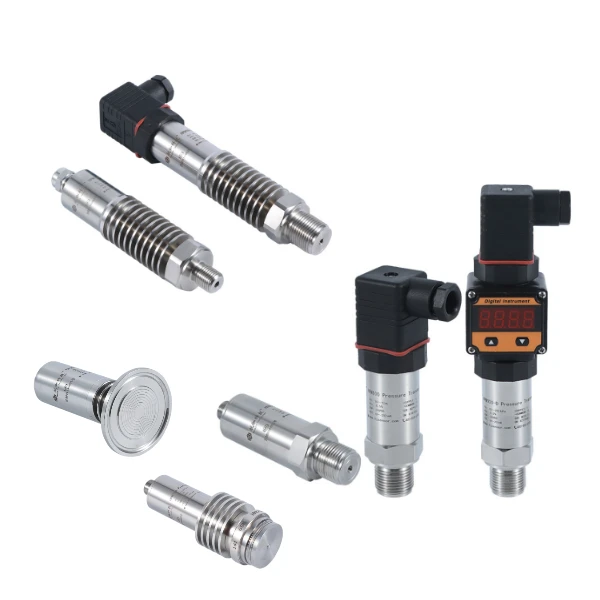
For pressure monitoring and control, the variety of pressure transducers available makes certain that there is an ideal gadget for practically every application imaginable. Industrial pressure transducers are made to stand up to extreme environmental problems while supplying trusted pressure measurements. For specialized requirements, there are vacuum pressure transducers, which supply boosted accuracy in measuring reduced pressures, and absolute pressure transducers that gauge pressure family member to a vacuum, making them excellent in scenarios where specific pressure requires to be understood, such as in vacuum systems and high-altitude applications.
Torque transducers, including rotary torque sensors, are likewise essential in applications entailing rotational forces. These devices procedure torque in mechanical systems, which is necessary for recognizing and optimizing machine efficiency. The integration of torque measurement within a broader system boosts the ability to check and regulate industrial procedures, leading to improved effectiveness and decreased downtime through predictive maintenance methods.
As we navigate with differing temperature levels and stress in industrial processes, the demand for high-temperature pressure sensors ends up being apparent. Guided radar level transmitters use radar innovation to gauge the distance to a liquid’s surface, offering reputable level measurement regardless of temperature or pressure fluctuations, making them perfect for complex industrial atmospheres.
In addition, high-temperature gas pressure sensors are important for procedures entailing gases that need to be checked for pressure in contexts such as heater or central heating boiler procedure. As sectors require more dependable and robust measurement services, the mix of different innovations, including guided wave radar level sensors, reinforces general system performance by enabling much more precise and trusted information collection.
The implementation of sophisticated measurement devices is not complete without taking into consideration the ins and outs included in their operation and application. For example, the working principle of a rotameter, which makes use of a float that climbs and drops within a cone-shaped tube, provides understanding right into flow rates by providing a direct aesthetic indicator of flow with the position of the float. This simplicity and directness make rotameters ideal for low-pressure applications and small flow monitoring.
In the context of handling fuel degrees in industrial settings, gasoline tank level monitoring systems play a crucial role in making sure that operations stay nonstop while complying with environmental laws. By incorporating level sensors and interaction innovations, these systems can supply real-time information transmission, therefore permitting drivers to keep an eye on fuel usage and anticipate when refueling will certainly be necessary. The raising demand for lasting techniques in industries has emphasized the requirement for accuracy in fuel monitoring, highlighting the significance of incorporating advanced monitoring technologies.
Discover just how accurate measurement and noticing technologies, such as ultrasonic level sensors, differential pressure transmitters, and flow meters, play a critical function in enhancing functional effectiveness and safety and security in industrial automation and procedure control.
When looking for these sophisticated measurement options, it is very important to partner with reliable flow meter representatives, providers, and suppliers who can provide high quality tools backed by technical support. Whether you’re searching for pressure transmitter suppliers for accurate pressure control systems or exploring alternatives for magnetic flow transmitters, choosing a reputable supplier is essential to achieving the preferred result in any industrial application. The expanding market for these necessary devices showcases the crucial function they play in modern markets, promoting both conformity and functional effectiveness.
As innovations proceed to enhance, recognizing the subtleties of numerous gauging devices and exactly how they adjoin within a system will certainly empower customers to make educated decisions, leading to optimized processes. Particularly, the improvement of intelligent pressure sensors and flow measurement devices, developed to user interface with modern-day industrial control systems, exemplifies a change towards incorporated remedies that not only measure but also supply workable information insights.
Whether with progressed sensors, innovative flow meters, or precise transducers, the future of industrial measurement and control is most certainly headed towards better class and performance, enabling industries to meet the growing needs of the worldwide marketplace while focusing on sustainability and safety and security. As markets welcome these innovative measurement solutions, the opportunities for improving functional flows and safeguarding sources become basically unlimited.